1. Collect and filter data
Training starts with large collections of text and code. Teams remove low-quality, unsafe, duplicated, or unusable material where possible.
The quality of the data strongly affects the model's behavior.
A large language model, or LLM, is trained by learning patterns from text and then being evaluated, tuned, stress-tested, and monitored. This page explains the process in plain language.
open glossary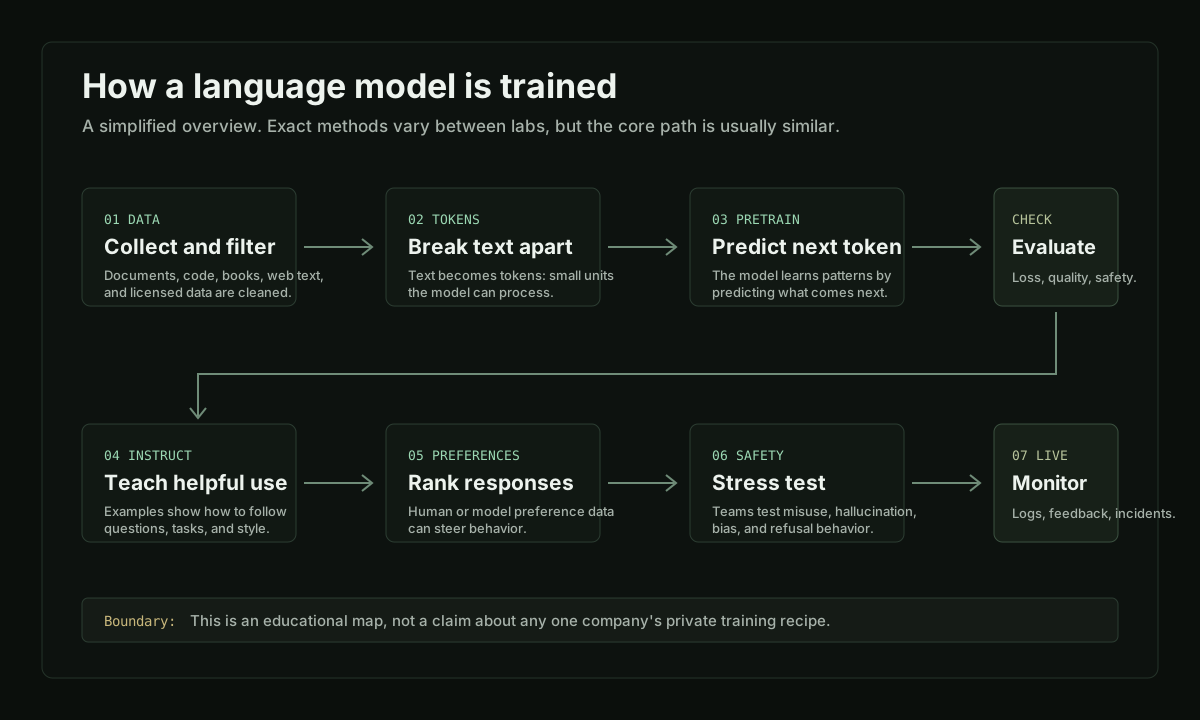
The model learns patterns from examples.
Teams test behavior before deployment.
Real users and real environments create new conditions.
Evidence is collected when behavior changes or fails.
SIGNALWATCH focuses on the last part of that path: what can be observed once systems meet real sources, real inputs, and real operational constraints.
Training starts with large collections of text and code. Teams remove low-quality, unsafe, duplicated, or unusable material where possible.
Text is split into small units called tokens. The model does not directly see words as humans do; it learns patterns across token sequences.
During pretraining, the model repeatedly tries to predict the next token. Over time, it learns grammar, facts, style, code patterns, and reasoning-like behavior.
Teams test whether the model is improving, memorizing too much, failing safety checks, or becoming unreliable on important tasks.
After pretraining, models are usually tuned with examples, instructions, feedback, or preference data so they respond in more useful and safer ways.
Deployment is not the end. Real users, real prompts, real images, and real environments reveal failures that training did not fully cover.
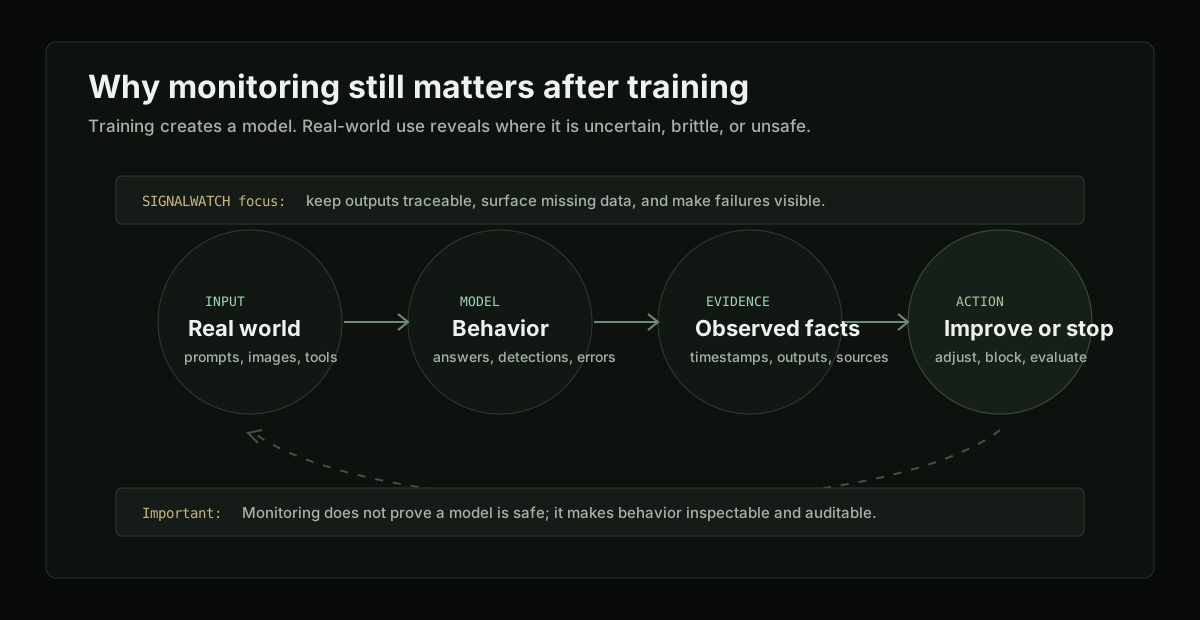
Training creates a model, but real-world use reveals how it behaves under pressure: unclear prompts, degraded images, missing context, biased data, tool errors, or unfamiliar situations.
SIGNALWATCH is built around that gap. It does not claim a model is safe because it passed a benchmark. It records evidence, timestamps, source links, confidence movement, and missing outputs.
core idea / after training, behavior still needs observation